Most bookselling guides tell you the same thing: "Feed the beast." They want you to source hundreds of $12 books, scan them as fast as possible, and ship them to Amazon FBA. When the model was new, you could make a decent living this way. But in 2026, if you follow that advice as a small seller, you aren't a business owner—you are a logistics volunteer for Amazon.
The "Hard Truth" of 2026 is that high-volume, low-value FBA is a recipe for burnout. You are driving trash around, paying for the fuel, the loading, and the prep time, only to watch Amazon's fee stack eat your $2 margin. If you want to actually make money this year, you need to flip the script: Go High-Value, Go Long-Tail, and Go Merchant Fulfilled.
The 2026 FBA Trap: "Driving Trash Around"
The math for small FBA sellers has broken. Between the $1.80 media closing fee, inbound shipping costs, and the "Prime bump" vanishing from the Buy Box algorithm, the "bread and butter" $12 book is dead in FBA.
What most sellers don't factor in is the Logistics of Trash. Every low-value book you send to FBA requires:
- Transportation & Fuel: Driving to thrift stores and then to UPS/FedEx.
- Labor: Loading, unloading, shelving, and packing boxes.
- Prep Costs: FNSKU labels, poly-bagging, and specialized boxes.
When you add those "invisible" costs to Amazon’s fulfillment fees, that $3 profit becomes a $1 loss. You are moving a lot of weight for very little gain. Unless you have a massive team and an industrial-scale operation, the high-volume FBA model is a trap.
The Winning Path: High-Value, Long-Tail MF
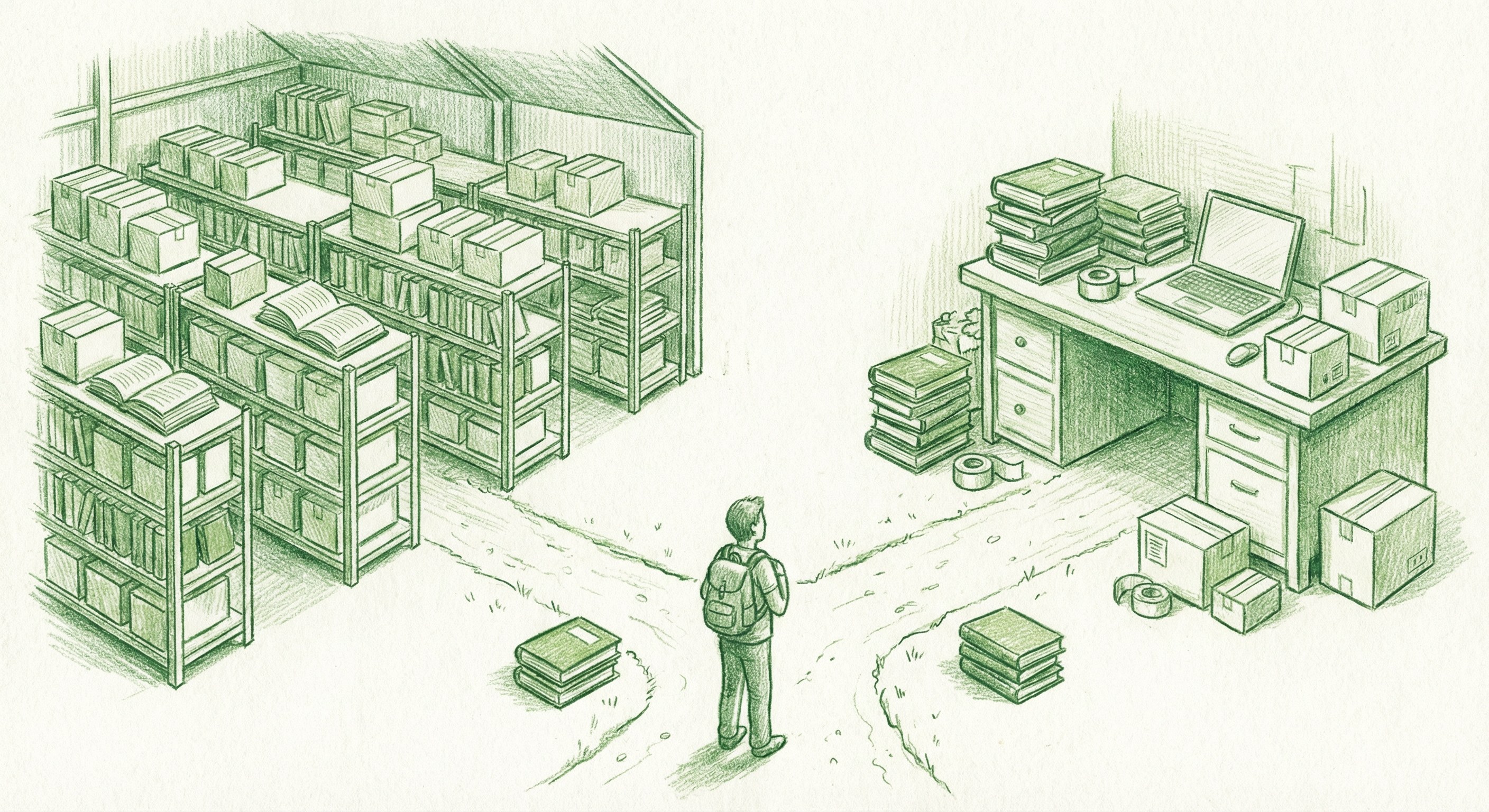
The real opportunity for small sellers in 2026 is what we call the "Chill" Strategy. Instead of trying to sell 100 books for $10, you sell 5 books for $200. This model relies on Merchant Fulfillment (MF) and three core pillars:
1. High Price ($50 - $500+)
Focus on niche titles, out-of-print textbooks, and specialty subjects. These books don't sell every day, but when they do, the profit from a single sale equals a month of "Baby Bulk" grinding.
2. Free Storage (The Spare Room Advantage)
In FBA, a long-tail book is a liability because of monthly storage fees. In your own home, a spare room or a few shelves in the garage cost you $0. You can afford to wait 6 months for the right buyer without your margin being bled dry by storage costs.
3. Control over Refund Risk
High-value books carry higher refund risk. With FBA, Amazon handles the returns and often refunds the buyer without question. With MF, you own the customer conversation. You can verify claims, provide photos, and protect your high-ticket inventory.
Sourcing for the 2026 Hybrid Model
To run this "Chill" strategy, your sourcing must be aggressive. You aren't just scanning for "green bars"; you are filtering for Gold.
- Free Inventory (Book Pickups): The best way to find $100 treasures is to get the volume for free. Run a local book pickup or buyback program. You take everything, keep the 5% that are high-value MF gems, and donate/recycle the rest.
- Keepa Comps: In 2026, many of the best books have no current offers on Amazon or eBay. Use AccelerList’s Keepa integration to check historical sales data. If a book hasn't been seen in a year but sold for $300 last time it surfaced—keep it and wait.
- Online Arbitrage: Use data to find mispriced gems on other platforms and bring them to the Amazon/eBay ecosystem.
The 5% Rule: When to actually use FBA
Does FBA still have a place? Yes, but only for about 5% of your inventory. Use FBA only if the book meets these strict qualifiers:
- Sales Rank under 50k: It will sell the moment it hits the warehouse.
- Seasonal Peaks: Current textbooks in August or January where the "Prime" speed matters most.
- Industrial Scale: You have reached the point where you have hired help and the volume justifies the logistics.
How AccelerList Powers the High-Value Operation
You don't need a warehouse to act like a professional. AccelerList is built to turn your spare room into a high-efficiency MF operation.
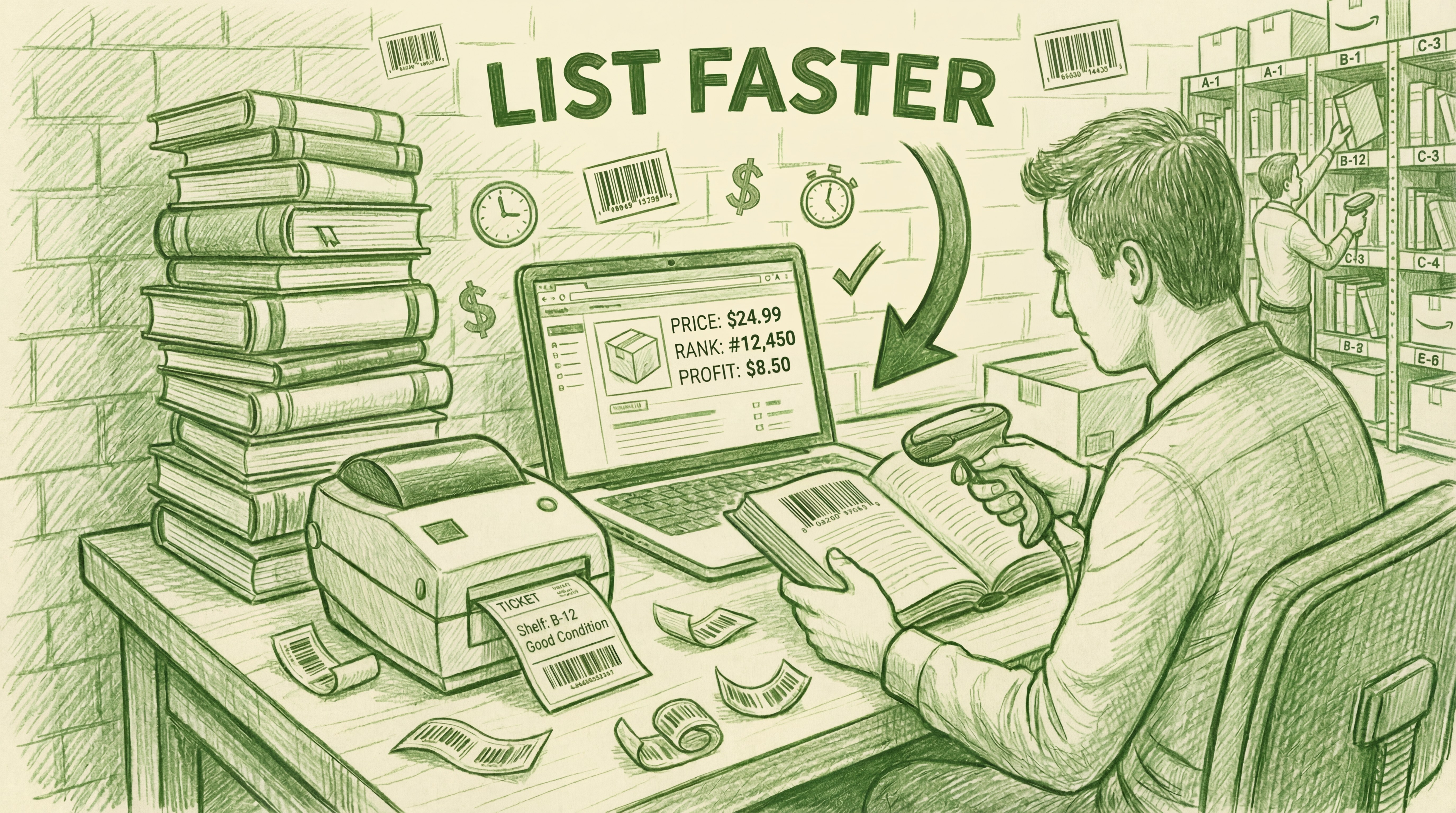
- The Ticket System: When you list an MF book, AccelerList prints a custom ticket that goes inside the book. This ticket acts as your location marker. When it sells, you know exactly which shelf to look on. No more hunting through piles.
- Multi-Channel Safety: For $100+ items, you want maximum eyes. AccelerList instantly cross-lists your MF inventory to eBay. eBay buyers pay for transparency, and our system ensures your listing is live on both platforms with a single scan.
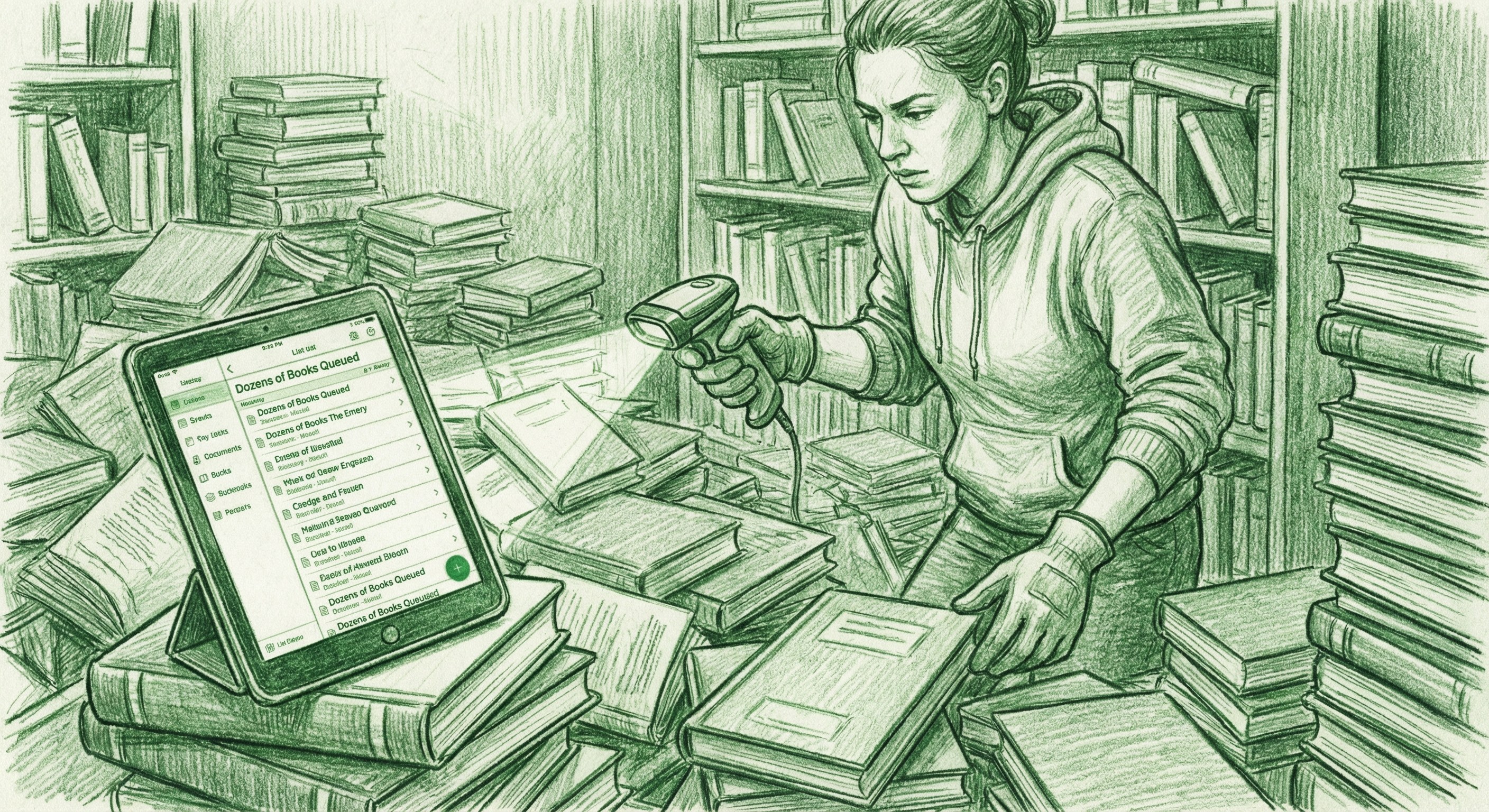
- No-Touch Workflow: Our batch listing flow is optimized for speed, so even your "manual" high-value listings are processed in seconds, not minutes.
Stop driving trash around. Start your 14-day free trial of AccelerList today and build a high-margin, high-value bookselling business that actually makes money.
Frequently Asked Questions
Is FBA or MF more profitable for books?
In 2026, for small sellers, MF is significantly more profitable. By fulfilling high-value items yourself, you avoid the FBA fulfillment fee, the storage fees, and the logistics costs of shipping inventory to Amazon’s warehouses.
How much space do I need for a Merchant Fulfilled business?
A single spare room or a wall of shelving can hold upwards of $20,000 in high-value inventory. Because you are focusing on value over volume, you don't need a massive footprint.
Can I really sell a $500 book on Merchant Fulfilled?
Yes. In fact, many buyers prefer high-value MF sellers because they often provide better descriptions and better packaging than an automated FBA warehouse. Combined with AccelerList's honest grading notes, trust is your biggest selling point.
What happens if I send a slow-moving book to FBA?
Amazon will charge you monthly storage fees. After 365 days, those fees increase dramatically (Long-Term Storage Fees). For long-tail, high-value books, this can completely wipe out your profit. Keep them in your own "free" storage instead.
FBA vs Merchant Fulfilled for Books — Which Makes You More Money?
FBA vs. Merchant Fulfilled: Which actually makes more money in 2026? While FBA offers Prime visibility, for most small sellers it has become a "low-margin trap." In the…

Amazon seller & Software Founder